
Yazd, Definition Of A Sustainable City According To The World Historical Heritage And Ecological Principles:
Yazd, Iran’s most magnificent dessert and the 1st registered Iranian city in the World Historical Heritage (WHH), has been facing many challenges for years, challenges entangled with natural habitat, climate, and man-made environments.
During the latest decades, Climate Change and Global Warming, in addition to the negative impact of Human Activities have caused an biological instability in the city of Yazd.
The Yazd Masterplan is trying to address the issue of water scarcity, sinking, pollutants and the rest of requirements and deficits by the new approach, while trying to organizing the physical state of the city.
Inevitably, the main philosophy of the masterplan, which is the physical organization of the city is still subject to the change, therefore, the plan mainly focuses on subjects such as the city’s physical expansion, city boundaries, usage designation within the boundaries of the city and organizing deteriorated fabric of the city within the existing patterns, construction codes and legislations.
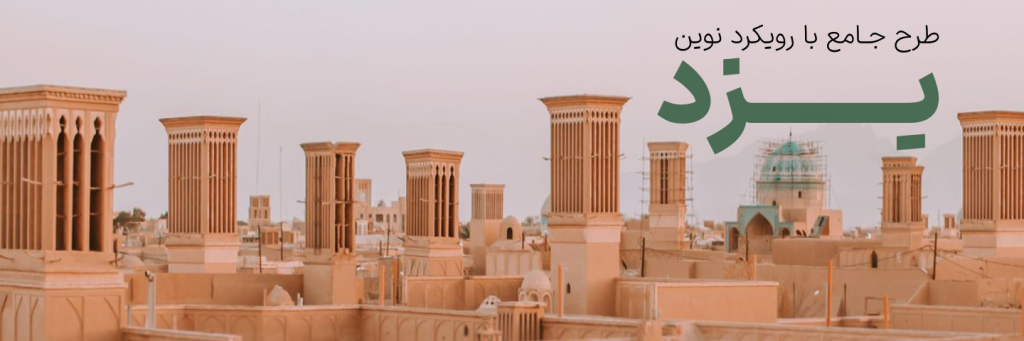
The Yazd masterplan focuses on preservation of historical values, religious identity of the city and the current trends and traditions whilst trying to prevail and safeguard the historical heritage such as the aqueduct, windbreaks, architectural patterns, as well as the intangible values consist of the customs and religion co-habitation. Reimagining a city based on antique trends, and modern ecological principles.
Major Challenges:
- Creating a balance and a practical coherence between the (WHH) fabrics and the valuable buildings or contemporary development requirements.
- Organization of City’s physical expansion with taking into account the environmental considerations, water scarcity, the possibility of providing public services and the requirement to consider the compactness of a sustainable city.
- Appropriate response to the demographic changes, economic modifications and tourism targets set in the plan.
Study Approach:
- Utilizing masterplan’s approach in the development planning procedure.
Concentration and implementation of participatory methods and its lessons to ensure the interests of stakeholders while paying attention to the requirements and limitations of executive agencies.
Proposed Solutions:
- redirecting the development to the existing Brown Fields, maximizing the land-use and prevention of physical expansion of the city.
- Strengthening public spaces’ network, social services, and infrastructures.
preservation and revitalization of historical, cultural and natural elements valuable to the city of Yazd.
Project’s Achievements:
- Formulating a development framework over a 20-year horizon in futures studies and evaluating various possible scenarios (desirable and undesirable)
- Presenting a city development model that is linked to the values existing in the historical context and emphasized in its world and national registration.
- Preparing physical development criteria and executive policies with the aim of improving the quality of the urban environment and approaches derived from studies regarding the future of the city.