

Major Challenges:
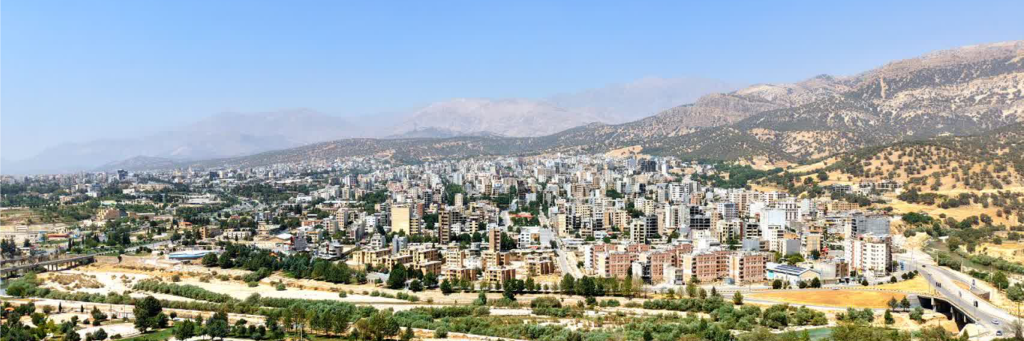
- Managing the physical expansion of the city In the context of mountainous topography and limited developable land.
- Reducing the danger of natural disasters such as floods, sink holes, and active tectonic plate boundaries as a result of urban development.
Strengthening the social, administration and tourism departments of the city parallel to the population growth and regional development.
Study Approach:
- Integrated analysis of the physical, social, economic and environmental structure with emphasis on the natural characteristics of the city.
- Identifying suitable development areas and high-risk zones by utilizing spatial analysis (GIS).
Formulating sustainable development strategies based on the preservation of natural resources, rivers, and valuable landscapes.
Proposed Solutions:
- Directing urban development to susceptible areas and controlling construction in lands containing natural constraints.
- Strengthening communication network, public spaces and social services according to the city’s regional role.
Preservation and revitalization of the Bashar River, natural habitats, and ecological corridors as elements of the city’s identity.
Project’s Achievements:
- Developing a spatial development framework for the city with a balanced and resilient development approach.
- Presenting executive policies for managing the land use and increasing the quality of the urban environments.
- Strengthening Yasuj’s role as an administrative, public, and tourism hub in the center of Kohgiluyeh and Boyer-Ahmad Province.